
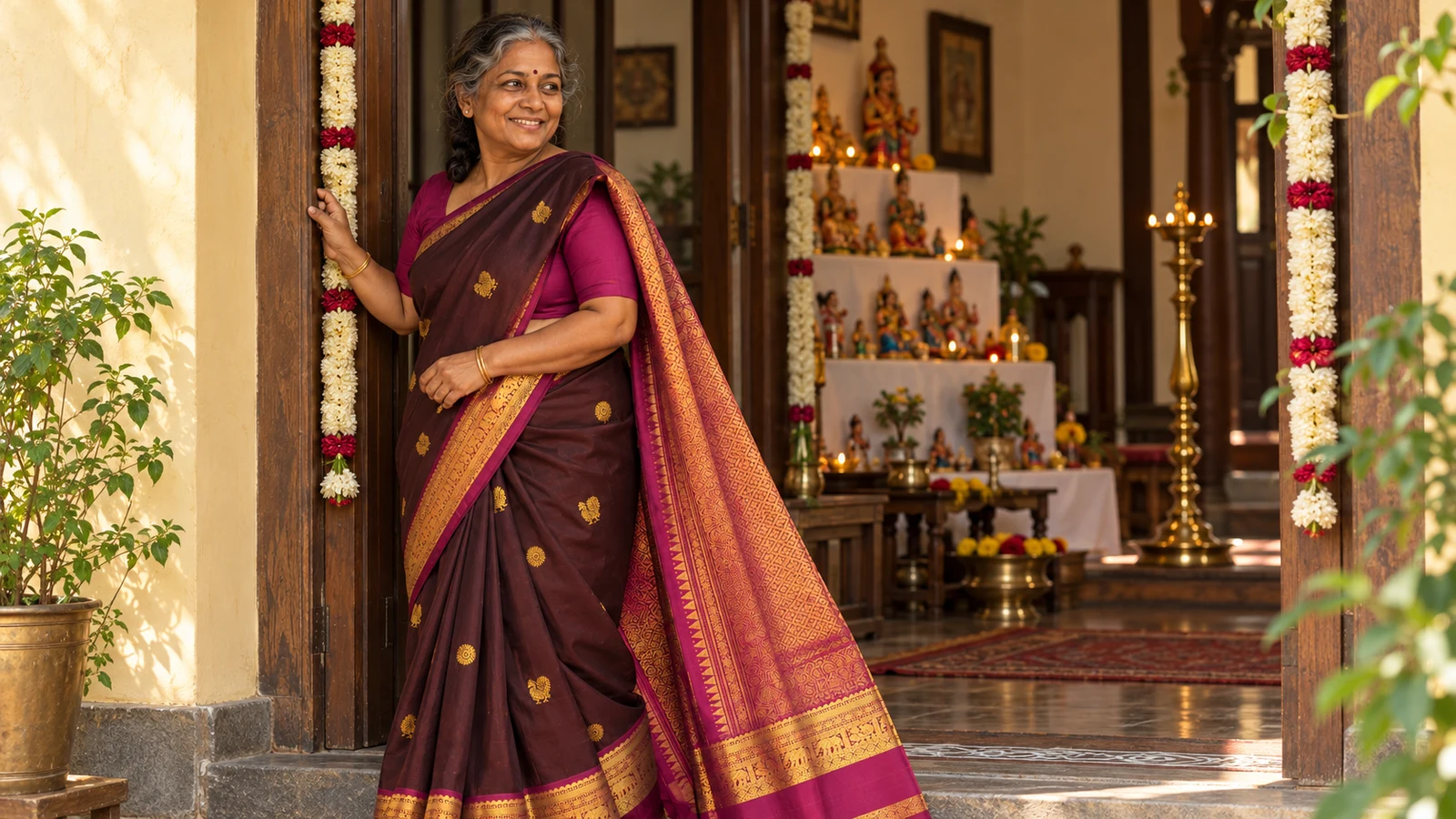
The first sign of Navratri is often a small rearrangement at home. A table moves to make room for the dolls. Someone checks whether the brass lamp needs polishing. A saree comes out of its cover, and the conversation turns to who might visit this year.
Over the next few evenings, the house takes on a different rhythm. There are flowers to buy, familiar songs to remember and guests who stay longer than they meant to. For families who celebrate, these preparations are as much a part of Navratri as the festival itself.
What do Navratri and Dasara celebrate?
Navratri means nine nights and centres on worship of the Goddess. Dasara, also called Dussehra or Vijayadashami, marks the festival's conclusion in many traditions. The stories, rituals and ways of gathering vary across India; a celebration in one household may look quite different from the one next door.
That variety is worth leaving room for. Gujarat's Garba gatherings, Bengal's Durga Puja celebrations and the doll displays of many South Indian homes each have their own character. Our guide to why Navratri is celebrated for nine nights offers a little more context.
Golu and Bombe Habba: making room for visitors
In many Tamil homes, Golu brings dolls out of storage and onto cloth-covered steps. Karnataka's Bombe Habba shares the pleasure of arranging a display and inviting people to see it. There may be divine figures, musicians, animals or a tiny scene a child has spent the afternoon building.
The visit matters as much as the arrangement. Someone recognises a doll from last year; someone else asks where a new one came from. Between a song, a serving of sundal and another conversation at the door, an ordinary weekday evening becomes a gathering.
The quieter days at the end of the festival
Toward the close of Navratri, many South Indian families observe Saraswati Puja and Ayudha Puja, honouring learning and the tools of work. Vijayadashami is also a time for first lessons and returning to a practice that matters.
Families follow different calendars and customs, so a local temple or family tradition is the best guide to the order and timing of observances.
A saree for the evening you have planned
Dressing for Navratri can be wonderfully uncomplicated. A familiar cotton may suit an evening of hosting; a silk you love may be just right for a special visit. Think about how you will spend the evening, whether you will be sitting on the floor, travelling between homes or helping with dinner.
Our Navratri saree guide and Golu dressing notes start there. If you enjoy following the daily palette, the 2026 Navratri colours offer another way to choose.
The preparations need not be perfect. A small display, something good to share and time to welcome a visitor can be enough. The part people remember is often the evening spent together.