Navratri literally brings together two simple words: nava, meaning nine, and ratri, meaning nights.
But across those nine nights lies an extraordinary variety of Indian tradition.
At its heart, Navratri is associated with the worship of the Divine Feminine — Shakti. Different traditions worship different manifestations of the Goddess, and the nine nights are commonly associated with the nine forms of Durga.
Yet Navratri is not celebrated in exactly the same way everywhere.
In Gujarat, evenings may mean Garba and Dandiya.
In Bengal, the great celebration is Durga Puja.
Travel south and Navratri begins to take another form.
In Tamil Nadu, families arrange Golu — stepped displays of dolls depicting gods, goddesses, people, animals and scenes from everyday life.
In Karnataka, a similar tradition is known as Bombe Habba.
Toward the final days, books and musical instruments may be placed before Saraswati. Tools, machines and vehicles are cleaned and honored during Ayudha Puja.
And finally comes Vijayadashami — a day associated with victory, learning and auspicious beginnings.
Perhaps this variety is one of the loveliest things about Navratri.
There isn't only one way for a home to celebrate.
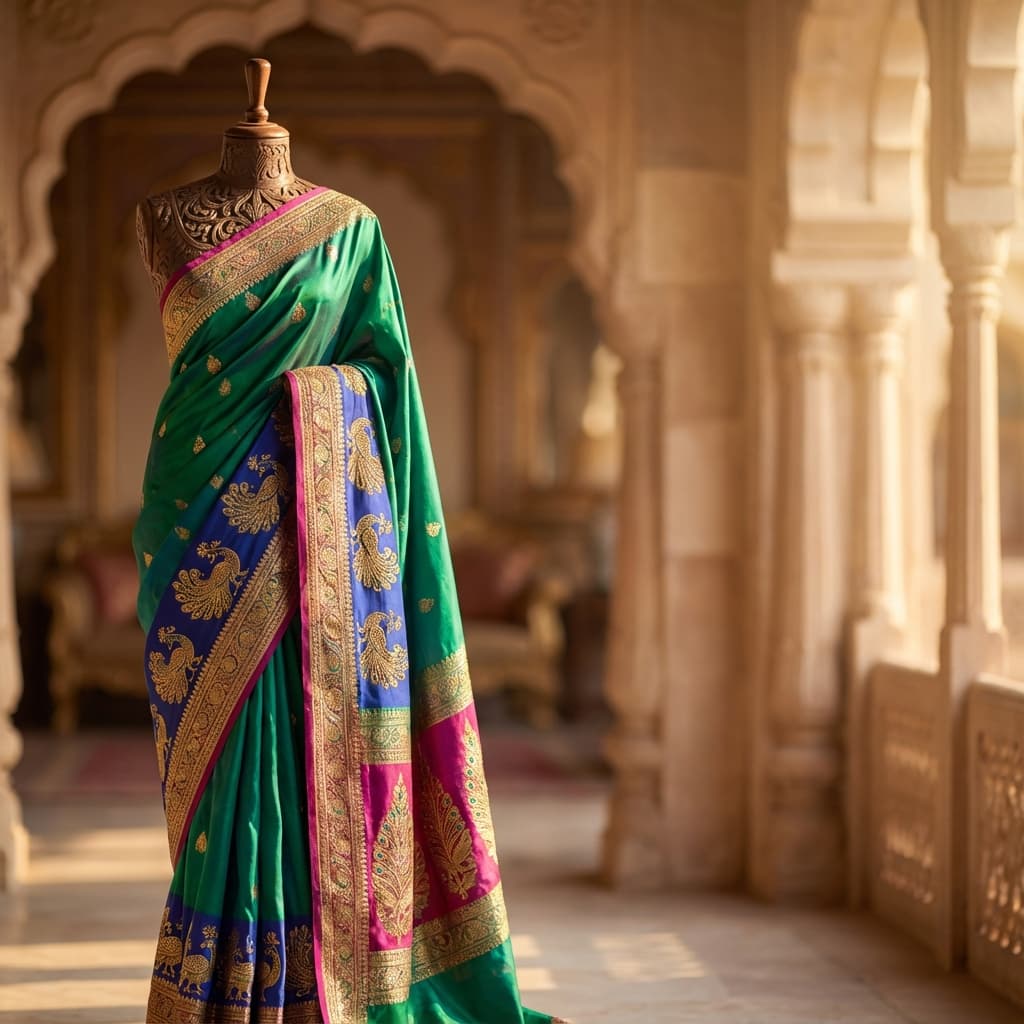
A grandmother may know one set of customs. Her daughter may follow some and adapt others. A granddaughter growing up thousands of miles away may celebrate with a small Golu, a video call home and a saree that came from India.
The form evolves.
The thread remains.
For nine nights, families make a little more room for prayer, beauty, music, visitors and tradition.
And sometimes that is enough to make an ordinary home feel festive.
Next in the Shlokam Journal: the nine colors associated with Navratri — and the beautiful tradition of dressing for each day.