
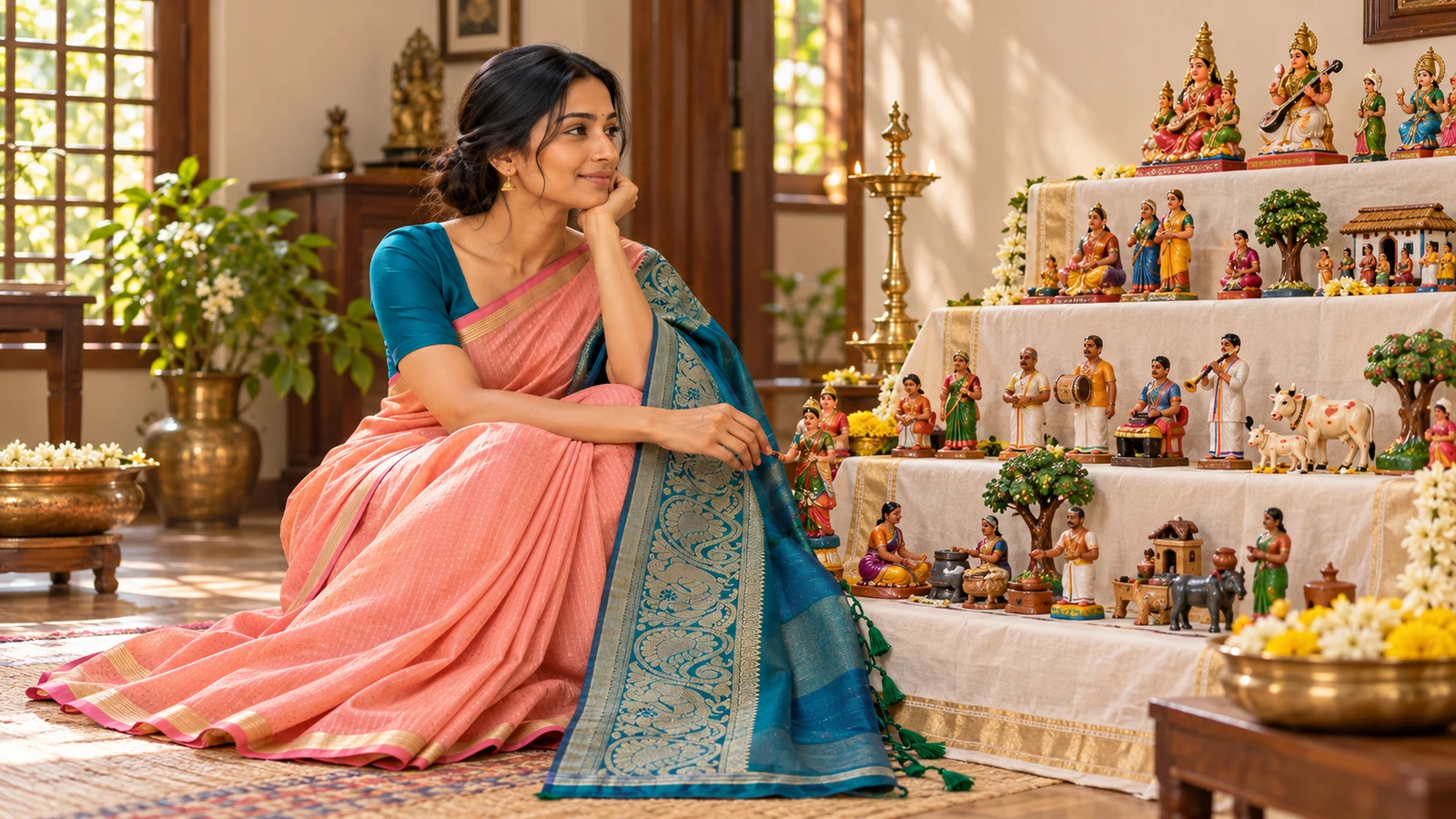
Unwrapping the Golu dolls is a task that can take longer than anyone expects. A familiar figure brings back a story. Someone pauses to examine a chipped edge. A new addition needs a place, but moving an old favourite turns out to require a small family discussion.
By the time the display is ready, the room has changed. So has the conversation: who is coming, what shall we make, and does anyone remember the song sung last year?
What is Golu?
Golu, also written Kolu or Bommai Golu, is a Navratri tradition observed in many Tamil households. Dolls and figurines are arranged on cloth-covered steps, often in odd-numbered tiers. Divine figures and scenes from stories may sit alongside musicians, animals, shops and everyday life.
The display varies from home to home. Some families follow a familiar arrangement each year; others choose a theme or make space for a child's miniature garden. There is no need for every Golu to look like a larger, more elaborate version of the one beside it.
The dolls people remember
A collection can hold several kinds of value at once. There is the craftsmanship of the figure itself, the story it represents and the memory of how it came home. A modest doll bought on a family trip may prompt more conversation than the grandest piece on the top step.
If you are beginning a display, start with an arrangement you can care for and enjoy. Leave room to see the figures clearly. A few pieces with stories you want to tell can make a thoughtful beginning.
An invitation to spend the evening
Visiting is part of the pleasure. In many homes there are songs, sundal and tamboolam, though the details follow each family's customs. The display gives guests something to look at together, and conversation rarely stays with the dolls for long.
For someone celebrating far from family, inviting a neighbour to see a small Golu can be a way of sharing the festival without needing to explain everything at once. A question about one figure is often enough to begin.
Sarees that become part of the memory
You may remember the saree someone wore while arranging the dolls as clearly as the arrangement itself. Bringing a favourite drape out for Navratri gives it another evening in use, rather than another year in storage.
Our guide to dressing for a Golu visit has practical suggestions. For a related tradition in Karnataka, explore Bombe Habba.
When it is time to pack the dolls away, a photograph or a small note about a newly added piece can help keep its story. Next year, someone will ask where it came from.
Read more about the festival's displays in this Tamil Nadu Navratri guide.