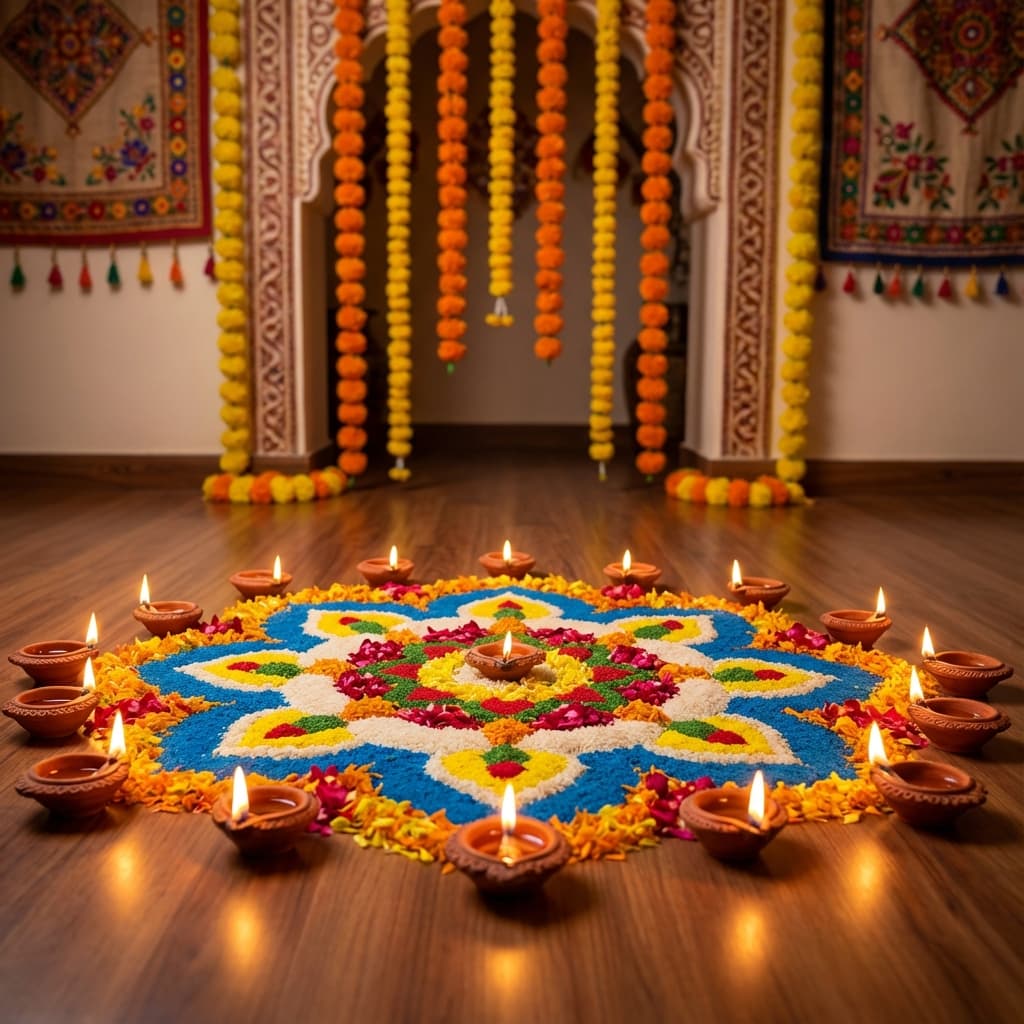
Varamahalakshmi Vratam is a festival of prayer, flowers, lamps, food and family. At its heart is the worship of Goddess Lakshmi, and many families include familiar Lakshmi shlokas and stotras as part of their prayers.
For this article, we have kept the focus on texts that are part of living Hindu traditions, referencing institutions such as Kanchi Kamakoti Peetham, Sringeri Sharada Peetham and Tirumala Tirupati Devasthanams (TTD), which preserve and transmit these chants through traditional practice and recordings.
1. Sri Sukta
हिरण्यवर्णां हरिणीं सुवर्णरजतस्रजाम् । चन्द्रां हिरण्मयीं लक्ष्मीं जातवेदो म आवह ॥
Hiraṇyavarṇāṃ Hariṇīṃ Suvarṇarajatasrajām, Candrāṃ Hiraṇmayīṃ Lakṣmīṃ Jātavedo Ma Āvaha.
Meaning: Invoke for me, O Agni, Lakshmi who is golden in complexion, radiant, adorned with gold and silver garlands, and who shines like the moon.
गन्धद्वारां दुराधर्षां नित्यपुष्टां करीषिणीम् । ईश्वरीं सर्वभूतानां तामिहोपह्वये श्रियम् ॥
Gandhadvārāṃ Durādharṣāṃ Nityapuṣṭāṃ Karīṣiṇīm, Īśvarīṃ Sarvabhūtānāṃ Tām Ihopahvaye Śriyam.
Meaning: I invoke Sri (Lakshmi), who is fragrant like sandalwood, who is difficult to overcome, who is ever nourished and ever sustaining, and who is the sovereign of all beings.
The Sri Sukta is one of the important Vedic hymns associated with Sri or Lakshmi. Its continued place in living worship can be seen at Sringeri Sharada Peetham, where it is recited during Devi worship, and in TTD's traditional Pancha Suktam devotional archive.
2. Kanakadhara Stotram
अङ्गं हरेः पुलकभूषणमाश्रयन्ती भृङ्गाङ्गनेव मुकुलाभरणं तमालम् । अङ्गीकृताखिलविभूतिरपाङ्गलीला माङ्गल्यदास्तु मम मङ्गलदेवतायाः ॥
Aṅgaṃ Hareḥ Pulakabhūṣaṇam Āśrayantī Bhṛṅgāṅganeva Mukulābharaṇaṃ Tamālam, Aṅgīkṛtākhilavibhūtir Apāṅgalīlā Māṅgalyadāstu Mama Maṅgaladevatāyāḥ.
Meaning: May the Goddess of auspiciousness grant me blessings. She, whose playful glance bestows all prosperity, is like a bee drawn to the dark tamala tree adorned with blossoms, and she embraces all divine wealth.
The Kanakadhara Stotram, traditionally attributed to Sri Adi Shankaracharya, is widely recited in Lakshmi worship. Kanchi Kamakoti Peetham preserves this stotram in its collection of Adi Shankara's works and also shares traditional chanting recordings.
3. Sri Lakshmi Stuti
A simple and widely used form of prayer during Lakshmi worship is the Sri Lakshmi Stuti.
नमस्तेऽस्तु महामाये श्रीपीठे सुरपूजिते । शङ्खचक्रगदाहस्ते महालक्ष्मि नमोऽस्तु ते ॥
Namaste'stu Mahāmāye Śrīpīṭhe Surapūjite, Śaṅkhacakragadāhaste Mahālakṣmi Namo'stu Te.
Meaning: Salutations to Mahalakshmi, the great illusion and divine power, worshipped by the gods, who holds the conch, discus, and mace. Salutations again and again to you.
Tirumala Tirupati Devasthanams (TTD) maintains devotional recordings through its Sri Venkateswara Recording Project, which includes traditional Lakshmi-related stutis and stotras used in daily worship. You can find these in TTD's devotional archive.
4. Sri Mahalakshmi Stavam
या देवी सर्वभूतेषु लक्ष्मीरूपेण संस्थिता । नमस्तस्यै नमस्तस्यै नमस्तस्यै नमो नमः ॥
Yā Devī Sarvabhūteṣu Lakṣmīrūpeṇa Saṃsthitā, Namastasyai Namastasyai Namastasyai Namo Namaḥ.
Meaning: To the Goddess who resides in all beings in the form of Lakshmi, salutations again and again.
Kanchi Kamakoti Peetham also documents traditional chanting of Lakshmi-related stotras, including the Mahalakshmi Stavam, as part of temple and sampradaya-based worship practices.
Which Should You Recite for Varamahalakshmi?
There is no need to make the prayer complicated. A family that already follows a particular sampradaya or family tradition should continue with that practice. For someone simply wishing to include Lakshmi prayers during Varamahalakshmi Vratam, the Sri Sukta, Kanakadhara Stotram, or a traditional Lakshmi Stuti are all beautiful and widely accepted starting points.
Kanchi Kamakoti Peetham also continues to provide guidance connected with the observance of Varalakshmi Vratham, reflecting that this is a living tradition still actively practised in homes and temples.
Perhaps the most beautiful part is simply hearing these words again in the home — sometimes words first heard from a mother or grandmother, and which continue to be spoken generation after generation.