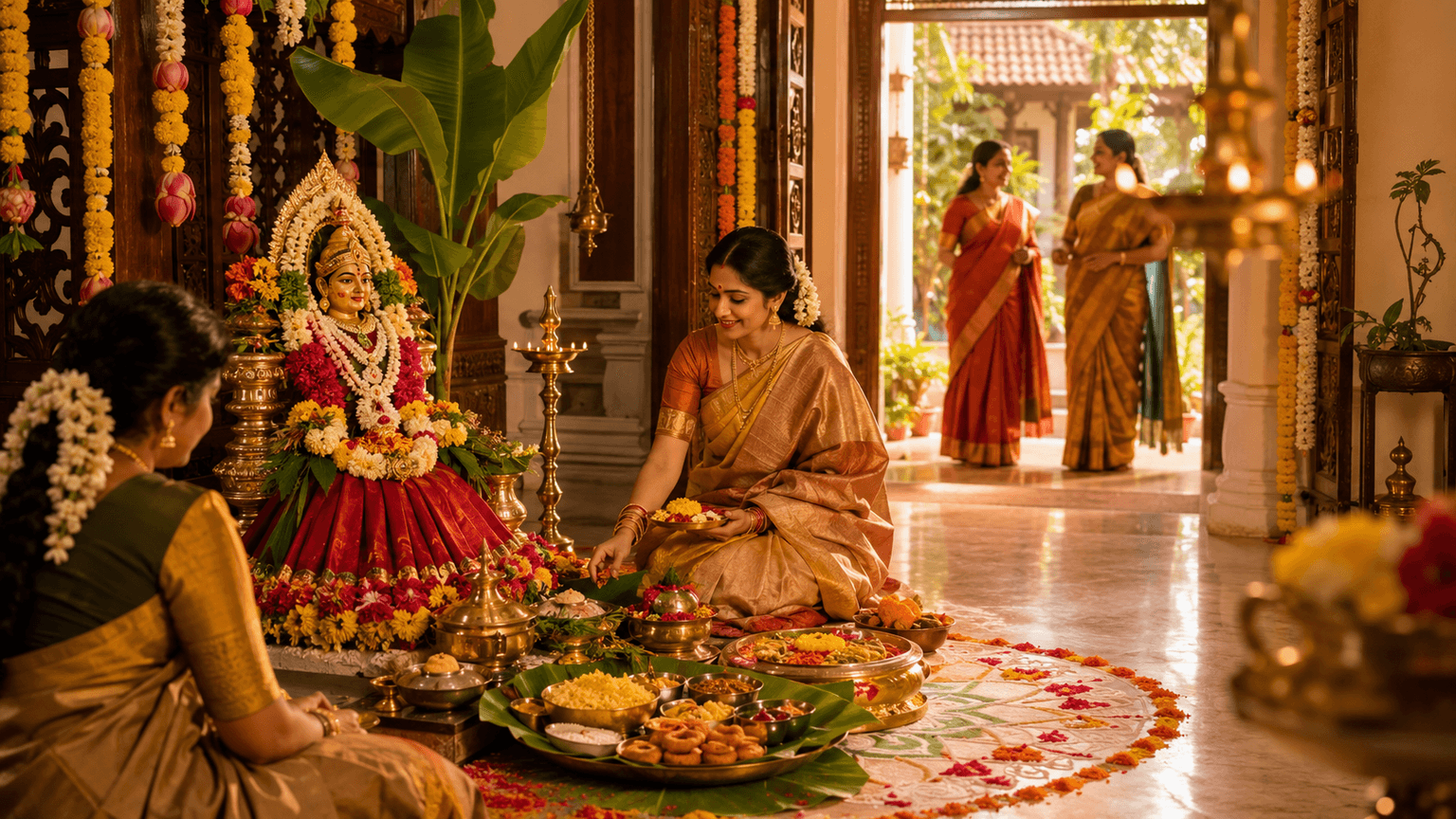
Varalakshmi Vratam is one of those festivals I remember as much for the feeling in the house as for the pooja itself. Preparations would start days in advance—cleaning the house, getting the flowers and pooja items ready, and planning what felt like an endless list of naivedyam. By the previous day, the kitchen would be in full swing, preparing puliharam, vada, payasam, kosambari, sweets and many other dishes, each made with a little extra care because it was for the Goddess first.
On the day of the pooja, everything seemed to come together at once. The house would be immaculately clean, flowers everywhere, lamps glowing, incense in the air, and the smell of freshly prepared food drifting through the house. The women of the extended family would arrive in beautiful silk sarees and jewellery, and suddenly the whole place felt brighter and more alive.
My mother used to call that feeling "kaḷe" (ಕಳೆ) in Kannada—a kind of radiance, grace and festive presence that is hard to translate perfectly. You simply know it when a home seems to have come alive after all the effort, devotion, flowers, light, food and people have come together.
That is the Varalakshmi Vratam I remember: auspicious, beautiful, busy, warm, and full of family.
Many of the sarees already in the Shlokam collection feel especially suited to an occasion like Varamahalakshmi—traditional silks, rich colours and borders that naturally belong in this kind of festive setting. If you are choosing a saree for the pooja this year, you can explore the collection below.